Jesus Names Christmas Tree Religious SVG
A Designer’s First Look: Clean, Reverent, and Ready for Stitching
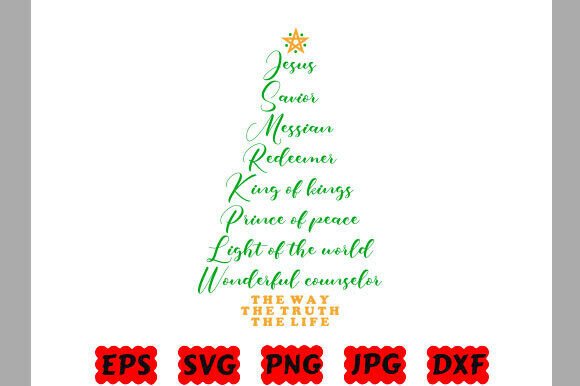
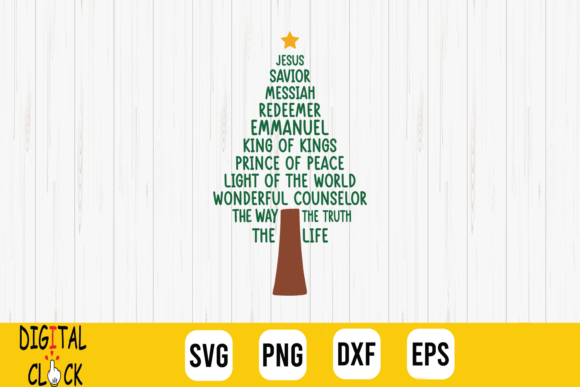
When I opened the Jesus Names Christmas Tree Religious SVG file, my eye went straight to the balance—how the tree shape anchors the composition while the names of Christ (“Emmanuel,” “Prince of Peace,” “Lamb of God,” etc.) flow organically through its branches like ornaments with meaning. It’s not overly ornate, but it’s not minimal either. There’s a quiet confidence in the letterforms: rounded but grounded, legible at a glance, yet detailed enough to hold attention on a finished embroidered patch or pillow cover. As an embroidery designer who’s stitched hundreds of faith-based motifs, I immediately pictured this on a natural linen tea towel for a church bazaar—or on a soft cotton baby onesie as a gentle nursery keepsake.
This Isn’t Just Holiday Decor—It’s a Story You Can Stitch
I tested the Jesus Names Christmas Tree Religious SVG on a custom embroidered tote bag for a local ministry’s Advent event. The design scaled cleanly down to 4.5 inches wide without losing clarity in the script-style names. On medium-weight canvas with tear-away + cutaway stabilizer, the satin-stitched outlines held crisp edges, and the fill-stitched tree base stayed dense without puckering. What stood out wasn’t just technical performance—it was how people *responded*. A volunteer paused mid-fold, pointed, and said, “That’s the one I’m buying for my daughter’s first Christmas.” That kind of emotional resonance matters more than perfect kerning—it signals that this machine embroidery design carries weight beyond aesthetics.
Where It Shines (and Where It Needs Care)
The Jesus Names Christmas Tree Religious SVG works beautifully for:
- Sweatshirt embroidery—especially on charcoal or navy fleece, where the contrast lifts the sacred names without glare;
- Embroidered patches—its balanced proportions and moderate detail translate well into sew-on or iron-on formats;
- Baby embroidery—on gauzy muslin blankets or knit bodysuits, the gentle curves feel tender, not preachy;
- Holiday gifts and boutique branding—it reads clearly on printable mockups for Etsy listings and pairs well with neutral packaging.
But be thoughtful with placement and fabric choice. Avoid using it on:
- Thin or highly stretchy knits (like lightweight jersey) without extra stabilization—the fine line work in the names can distort;
- Curved surfaces like structured caps, unless you reduce size and simplify thread paths first;
- Dark, textured fabrics (e.g., heavy terry cloth towels) where small script details may blur visually after stitching;
- Products meant for frequent washing (like kids’ bibs) unless you verify stitch density supports durability—tight fills hold up better than delicate running-stitch accents.
Design Integrity Meets Real-World Craft Business Needs
As an Etsy seller and small shop product developer, I pay close attention to how a digital embroidery file affects perceived value. This design doesn’t scream “mass-produced”—its hand-drawn warmth and intentional spacing give handmade products authenticity. When stitched on a cream-colored apron for a Christian kitchenware brand, it elevated the item from functional to meaningful. Customers notice that difference. They’re more likely to tag your shop, share photos, or request matching items—because the Jesus Names Christmas Tree Religious SVG feels personal, not generic.
That said, don’t assume it fits every commercial embroidery context. If you’re creating bulk merchandise for a church fundraiser, test the design across multiple fabric types first. One batch on 100% cotton duck canvas looked rich and substantial; the same file on polyester poplin felt flatter, less dimensional. Thread color choice matters too—navy or burgundy thread against ecru fabric gave richer depth than black, which sometimes read as harsh on softer substrates.
Practical Notes Every Embroidery Designer Should Check
Before cutting your first production run—or listing it as a T-Shirt Designs digital download—here’s what I recommend:
- Test on scrap fabric that matches your final substrate—not just color, but weight and stretch;
- Review stitch density in your embroidery software: look for areas where fill stitches might overlap tightly near branch tips or name junctions;
- Confirm hoop size compatibility: this design scales well, but avoid pushing below 3.75” without checking legibility of smaller names;
- Inspect small details in black-and-white mockups—some names may need slight manual cleanup if converted from SVG to PES or DST without optimization;
- Compare light vs. dark fabric backgrounds in your design preview—names like “Alpha and Omega” rely on contrast to land;
- Use proper stabilizer: medium cutaway for stable wovens, lightweight tear-away for knits, and always float the top layer for script-heavy sections;
- Verify licensing before selling finished items or reselling the Graphics file—this is especially critical for craft business owners and digital product sellers.
Final Thought: It’s Not Just a Design—It’s a Conversation Starter
In my decade of reviewing embroidery files for makers, few strike that rare balance: reverence without rigidity, detail without clutter, faithfulness without fuss. The Jesus Names Christmas Tree Religious SVG belongs on heirloom-quality pieces—pillow covers tucked into nurseries, personalized sweatshirts gifted at Christmas Eve services, or even discreetly embroidered inside the collar of a pastor’s robe. It doesn’t shout. It invites. And in today’s handmade market, that quiet intentionality is exactly what builds trust, repeat customers, and real connection—one thoughtful stitch at a time.