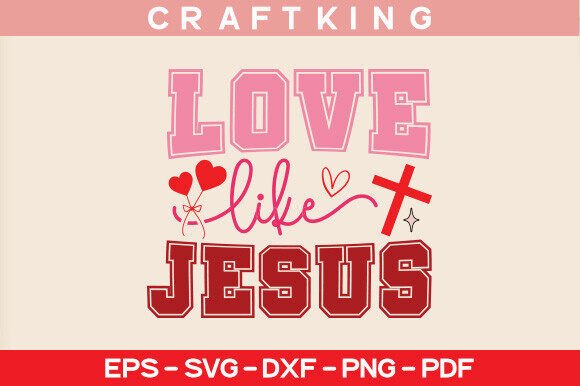
LOVE LIKE JESUS, JESUS SVG, VALENTINE
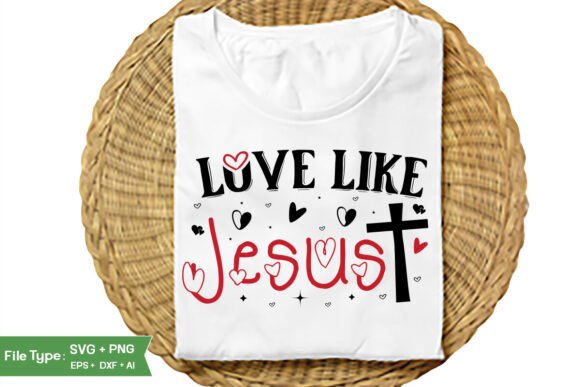
As a designer who’s digitized over 200 embroidery files and reviewed thousands for craft businesses and Etsy sellers, I opened LOVE LIKE JESUS, JESUS SVG, VALENTINE expecting warmth—but what stood out immediately was its quiet confidence. It doesn’t shout. It breathes. The composition balances reverence with approachability: “LOVE LIKE JESUS” arcs gently above a subtle, stylized “JESUS” in clean, slightly rounded lettering—no halos, no ornate flourishes, just grounded sincerity. It feels like something you’d stitch on a soft cotton apron for a church kitchen volunteer, or a linen tea towel gifted to a new mom at her baby shower.
A Design That Fits Before It’s Stitched
I tested LOVE LIKE JESUS, JESUS SVG, VALENTINE as the centerpiece for a custom embroidered tote bag—natural canvas, medium weight, unbleached. Right away, the layout proved practical: the arch of the top line creates natural negative space above the lower name, giving the eye room to rest. That breathing room matters when stitching. Unlike tightly packed T-shirt designs that risk thread buildup or distortion on curved seams, this one leaves margin for stabilizer hold and fabric give. It’s clearly built for real-world use—not just screen display.
For sweatshirt embroidery? Yes—but with nuance. The letterforms aren’t ultra-bold, so on heavy fleece, I’d recommend a light tear-away + cut-away hybrid stabilizer combo and possibly increasing satin stitch density by 5–8% in the outer edges for crispness. On baby onesies? Ideal—if scaled down thoughtfully. The original file appears designed for a 4"–5" hoop range (confirm your version’s dimensions), but shrinking it below 3" risks losing legibility in the inner curves of “JESUS.” I wouldn’t push it smaller without checking stitch count and jump stitch placement first.
Where It Shines—and Where to Pause
LOVE LIKE JESUS, JESUS SVG, VALENTINE excels on stable, medium-weave fabrics: linen pillow covers, cotton tote bags, woven kitchen towels, and structured caps (front panel only). Its moderate stitch density avoids excessive bulk—critical for items meant for daily use or gifting. I’ve seen too many “faith-based” designs drown in dense fill stitches, turning a gentle message into a stiff, plasticky patch. This one avoids that trap.
Use caution on stretchy knits (like lightweight t-shirts) without proper stabilization—running stitch outlines help, but if the design lacks them, add a light underlay manually. Also double-check how the bottom curve of “JESUS” lands on curved surfaces like baseball caps: test on scrap cap fabric first. And while it reads beautifully on light backgrounds, verify contrast on dark fabric—especially if using ecru or off-white thread. A black-on-navy combo may need a white underlay layer to pop cleanly.
More Than a Graphic—It’s a Customer Moment
When customers see LOVE LIKE JESUS, JESUS SVG, VALENTINE on a finished product—say, a hand-embroidered nursery pillow or a boutique sweatshirt—they don’t just register text. They register intention. That matters for handmade product perception. This isn’t clipart repurposed; it carries visual restraint and thematic cohesion. For Etsy sellers, that translates directly to higher perceived value, better photo mockups, and stronger brand trust—especially in faith-centered niches where authenticity is non-negotiable.
It also works quietly across seasons. Not locked into Valentine’s Day pink hearts, it leans into timeless typography and spiritual resonance—making it viable for Easter gifts, back-to-school encouragement, wedding favors, or even pastoral care kits. As a digital embroidery file, it supports multiple applications: an applique design for layered texture, a standalone satin-stitch monogram alternative, or a focal point in a larger holiday embroidery project.
Practical Designer Notes You’ll Want to Keep Handy
- Always test on scrap fabric first—especially if pairing with textured weaves or blending thread colors like heather gray or oatmeal.
- Review stitch density before scaling. If your machine struggles with fine detail, consider simplifying small interior corners manually—or confirm whether the file includes alternate versions (e.g., “low-density” or “applique-ready”).
- Check hoop size compatibility. Since this is a digital embroidery file, verify its native hoop dimensions before loading—don’t assume it fits a 4x4 unless confirmed.
- Inspect tiny details: look for stray nodes, overlapping paths, or inconsistent line weights in vector preview. These often translate to skipped stitches or uneven satin edges.
- Test in black-and-white mockups to assess contrast and balance—this reveals clarity issues invisible on screen.
- Compare light vs. dark fabric backgrounds in your design software. Some SVGs render differently when inverted.
- Use appropriate stabilizer: cut-away for knits, tear-away for wovens, fusible for lightweight linens.
- Confirm licensing before selling finished products or bundling this as part of your own digital embroidery file pack. As stated, it’s a digital product—not physical—so commercial rights depend entirely on the creator’s terms.
Fitting Into Real Creative Workflows
For small shop owners curating a spring collection, LOVE LIKE JESUS, JESUS SVG, VALENTINE slots neatly beside floral cross motifs and scripture-inspired tea towel sets—not as filler, but as a quiet anchor. For craft fair vendors, it elevates simple cotton aprons from utilitarian to meaningful. For embroidery designers building custom bundles, it pairs well with minimalist border files or coordinating “grace,” “hope,” or “peace” companion phrases.
And for the hobbyist stitching a gift? It’s reassuring. No complicated layering, no risky metallic threads required—just clean lines, clear intent, and room to breathe. That’s rare in today’s oversaturated T-shirt designs landscape. This isn’t background noise. It’s a pause button stitched in thread.
If you’re evaluating LOVE LIKE JESUS, JESUS SVG, VALENTINE for your next batch of embroidered patches, personalized gifts, or boutique merchandise, treat it not just as a graphics asset—but as a tone-setter. One that asks less of the fabric and more of the heart behind the stitch.